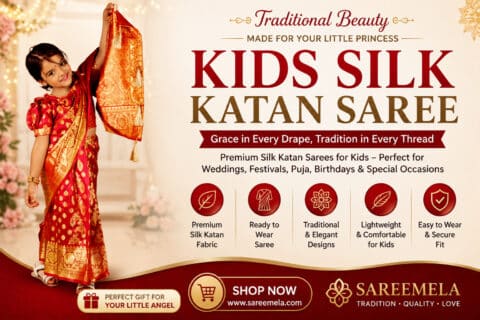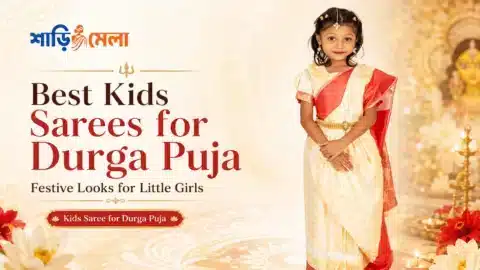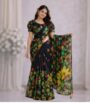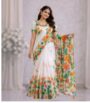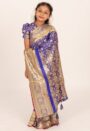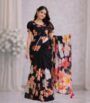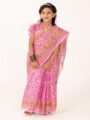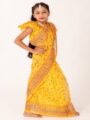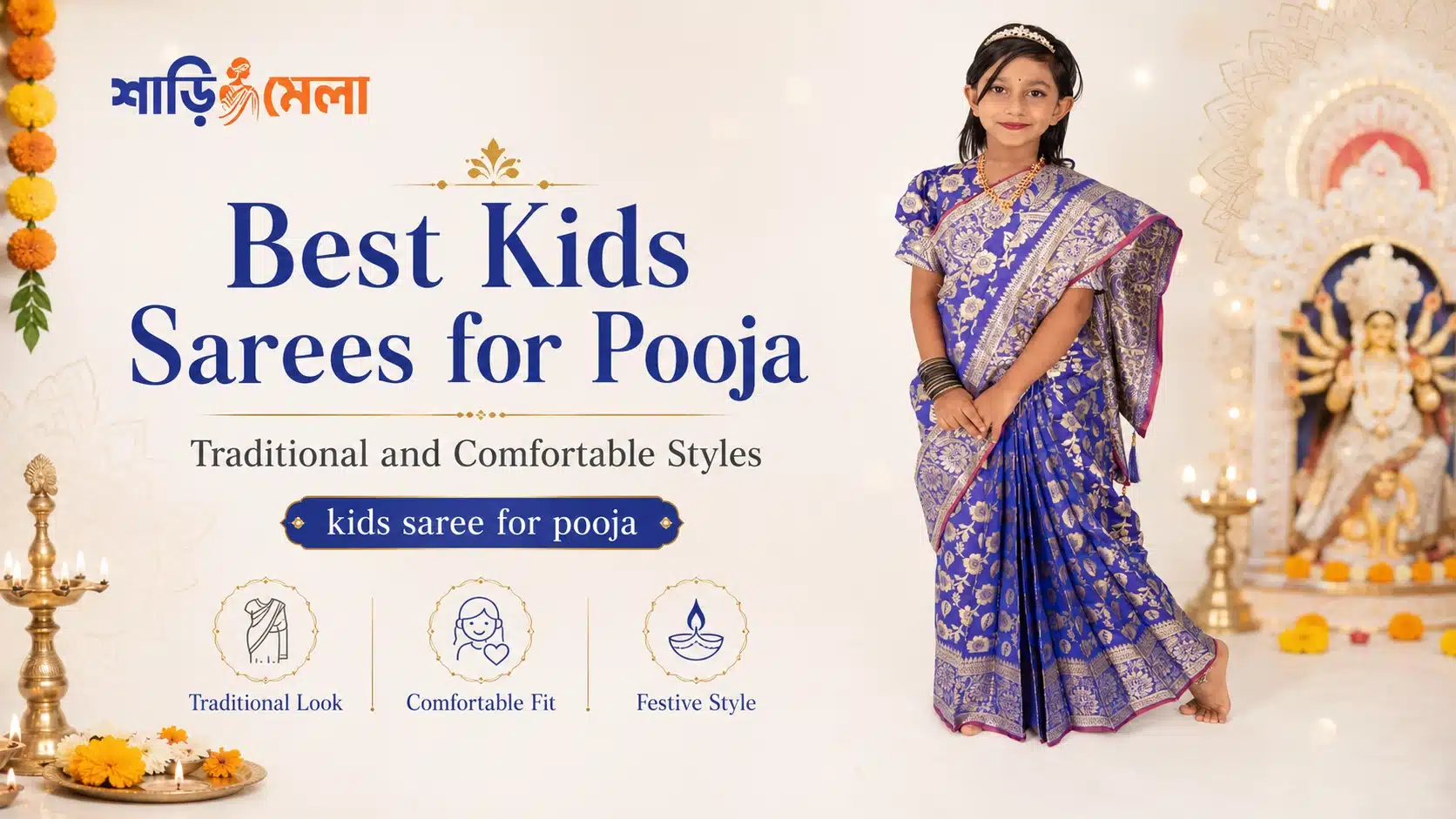
A beautiful kids saree for Pooja allows a young girl to participate in a traditional celebration while remaining comfortable enough to walk, play, visit pandals and enjoy family gatherings. The best saree should not only look festive in photographs—it should also feel soft, fit securely and allow natural movement throughout the day.
Durga Puja is filled with colour, devotion, family visits, cultural performances and festive meals. Children may spend several hours wearing the same outfit, especially during Saptami, Ashtami, Navami or Dashami celebrations. A heavy saree, tight blouse or complicated drape can quickly become uncomfortable for them.
This is why many parents now prefer a ready-to-wear kids saree. A pre-stitched design offers the traditional appearance of a saree without requiring complicated pleating or repeated adjustments. It can be easier to put on, more secure during movement and less stressful for both parents and children.
At Saree Mela, parents can explore ready sarees for children in Cotton, Silk, Katan, Jamdani and Banaroshi styles. The collection is designed around easy dressing, matching blouses and child-friendly festive presentation.
This complete guide explains:
- Which saree styles are suitable for Pooja
- How to select the right fabric
- Which colours work for different Puja days
- How to choose the correct size
- How to keep children comfortable
- Which accessories and footwear to use
- Which mistakes parents should avoid
- Where to buy a kids ready saree online in Bangladesh
What Is a Kids Ready Saree for Pooja?
A kids ready saree is a pre-stitched or pre-draped saree created specifically for young girls. Instead of manually creating pleats and wrapping a long saree around the body, the main structure is already prepared.
Depending on the design, a ready saree may include:
- Pre-stitched front pleats
- A secured or attached pallu
- An elastic or adjustable waist
- Hooks, buttons or a simple fastening system
- A matching readymade blouse
- Age-based sizing
- Child-friendly length
- Lightweight finishing
A traditional saree may require several pins, careful pleating and frequent adjustment. A ready saree simplifies this process while preserving the graceful look associated with Bengali celebrations.
Saree Mela describes its ready-to-wear sarees as pre-stitched designs that can be worn without traditional draping. Its kids collection includes matching blouses and options suitable for festivals, weddings, cultural programmes and family occasions.
Parents can browse the complete Kids Ready Saree Collection before selecting a Pooja outfit.
Why Ready Sarees Are Suitable for Pooja
They save dressing time
Pooja mornings can be busy. Families may need to prepare children, arrange transport, visit relatives and reach a programme on time. A pre-stitched saree reduces the time needed to create and secure pleats.
They stay more secure
Traditional draping can loosen when children walk, run, sit or dance. A properly fitted ready saree is less likely to require repeated adjustment.
They support easier movement
A child should be able to walk comfortably, climb stairs, sit for prayers and participate in cultural activities. Ready sarees are generally designed with a shorter, more manageable length.
They require fewer pins
Sharp safety pins can create discomfort or risk if placed carelessly. Many ready sarees rely on stitching, hooks or elastic instead of several pins.
They offer a complete look
Many kids ready sarees include a coordinated blouse, making it easier to create a polished festive outfit.
They help children feel confident
An outfit that stays in place allows children to focus on the celebration instead of worrying about loose pleats or a falling pallu.
Best Kids Saree Styles for Pooja
The right style depends on the child’s age, the programme, the weather, the length of the event and the level of formality.
1. Red and White Cotton Kids Ready Saree
A red and white saree is one of the most recognisable choices for Bengali festive occasions. It creates a classic look that can work especially well for Ashtami, Dashami, school celebrations and family photography.
Cotton is a practical fabric when the child will be wearing the outfit for several hours. It is generally lighter and more breathable than heavily woven festive fabrics.
A red and white cotton ready saree can be paired with:
- A red or white matching blouse
- Small red bangles
- A simple red bindi
- White flowers or red ribbon
- Comfortable red or gold flats
Parents looking for this colour combination can view the Red-White Boishakhi Cotton Kids Ready Saree, which is listed with soft cotton fabric, a matching blouse and age-group sizing.
2. Jamdani Kids Ready Saree
Jamdani-inspired designs are ideal for families who want a distinctly Bengali appearance. Traditional motifs can create a graceful cultural look without requiring excessive embroidery or embellishment.
A lightweight Jamdani ready saree may be suitable for:
- Durga Puja celebrations
- School cultural programmes
- Family gatherings
- Traditional photography
- Temple visits
- Dance or recitation events
Saree Mela presents its Jamdani kids ready sarees as breathable, lightweight designs with traditional patterns and matching blouses.
Explore the Jamdani Kids Saree Collection.
3. Banarasi Kids Ready Saree
Banarasi is a strong choice for a more formal or royal Pooja look. Its woven patterns and festive appearance make it suitable for evening programmes, family events and special photography.
A lightweight Banarasi kids saree may work well for:
- Navami evening
- Formal Puja invitations
- Family celebrations
- Stage performances
- Festive dinner events
Deep shades such as red, maroon, purple, royal blue and gold can create a rich traditional appearance.
Saree Mela’s Banaroshi category includes Pankha, Lata and Lota-inspired designs that are pre-stitched and paired with matching blouses.
Browse the Banaroshi Kids Saree Collection.
4. Katan Kids Ready Saree
Katan sarees offer a smooth, polished and traditional festive look. A soft Katan kids ready saree can be a good option when parents want an outfit that appears premium without using excessive decoration.
Popular Katan styles may include:
- Soft Lota Katan
- Bota Katan
- Pankha Katan
- Double-layer Katan
- Banarashi Katan
- Zari-bordered Katan
Saree Mela lists multiple Katan kids styles designed for weddings, Eid and cultural celebrations. The same lightweight festive qualities can also make them suitable for Pooja.
View the Katan Kids Saree Collection.
5. Silk Kids Ready Saree
Silk creates a bright, elegant appearance and photographs well during festive occasions. However, parents should choose a lightweight version rather than a heavy or stiff saree.
Silk may be suitable for:
- Evening Pooja programmes
- Family invitations
- Navami celebrations
- Stage performances
- Festive photo sessions
Look for a blouse with a soft inner finish so decorative stitching does not irritate the child’s skin.
Explore the Silk Kids Saree Collection.
6. Chanderi Silk Kids Saree
Chanderi-style silk can provide a delicate festive shine while remaining visually lighter than heavily decorated bridal fabrics.
Popular design details may include:
- Floral digital prints
- Leaf motifs
- Batik patterns
- Butterfly patterns
- Contrasting borders
- Soft pastel shades
A Chanderi silk ready saree can work well for children who want a colourful party look for Navami evening or a family gathering.
7. Chunri Cotton Kids Ready Saree
Chunri prints combine cheerful patterns with the comfort of cotton. These sarees can be practical for younger children, daytime pandal visits and long cultural programmes.
Suitable colours may include:
- Bright yellow
- Blue
- Red
- Light purple
- Pink
- Green
Chunri cotton can also be easier to maintain than heavily woven festive fabrics.
8. Pastel Kids Saree
Not every Pooja outfit needs to be deep red or maroon. Pastel shades create a softer, modern festive look.
Consider:
- Lavender
- Blush pink
- Peach
- Mint green
- Powder blue
- Light yellow
- Ivory with a colourful border
Pastels can work especially well for morning programmes, younger children and coordinated family photography.
9. Floral Print Kids Ready Saree
Floral prints create a cheerful style without making the outfit too heavy. They can be suitable for children who prefer simple patterns rather than dense zari work.
Choose a floral design with:
- A soft base fabric
- Small or medium motifs
- A comfortable matching blouse
- A light border
- Secure pre-stitched pleats
10. Double-Layer Kids Ready Saree
A double-layer saree can create a fuller and more decorative appearance. However, parents should check whether the additional layer adds too much weight.
Before buying, confirm:
- The total fabric weight
- The waist fastening
- The length of both layers
- Whether the child can sit comfortably
- Whether the pallu stays secure
11. Traditional Red Kids Saree
A solid or patterned red saree is a versatile Pooja choice. It can be worn with gold, white, green or contrasting accessories.
Red works well for:
- Ashtami
- Kumari Puja programmes
- Dashami
- Family portraits
- Cultural performances
For a child, avoid combining a red saree with too many heavy accessories. The saree should remain the main visual element.
12. Yellow Kids Saree
Yellow, mustard and golden shades are cheerful options for daytime celebrations. They pair well with red, green or maroon borders.
A yellow saree can be styled with:
- A red blouse
- Small floral hair accessories
- Red bangles
- Simple flat footwear
- A small bindi
13. Blue or Purple Festive Saree
Blue and purple are useful alternatives for parents seeking something different from the traditional red-and-white combination.
Royal blue, navy, violet and deep purple can work well for evening programmes. Pastel blue and lavender are better suited to softer daytime looks.
14. Printed Cotton Saree for School Pooja
For a school programme, comfort and movement are usually more important than a heavily formal appearance.
A printed cotton ready saree may be preferable because it can be:
- Lightweight
- Easier to carry
- Comfortable under stage lighting
- Suitable for group performances
- Simpler to maintain
- Less restrictive during dance or recitation
15. Mother-Daughter Coordinated Saree Style
Parents can create a coordinated appearance by matching colour families rather than choosing identical designs.
For example:
- Mother in red Jamdani and daughter in red-white cotton
- Mother in purple Banarasi and daughter in pastel purple Katan
- Mother in blue silk and daughter in blue cotton
- Mother in traditional white-red saree and daughter in a ready version
Saree Mela carries both kids and adult ready-to-wear options, allowing families to explore coordinated festive styles.
Fabric Comparison for a Kids Saree for Pooja
| Fabric | Comfort Level | Festive Appearance | Best Use | Care Level |
| Cotton | Very comfortable | Simple and traditional | Daytime Puja, school events | Easy |
| Jamdani | Lightweight and breathable | Heritage-inspired | Ashtami, cultural programmes | Moderate |
| Silk | Smooth and festive | Elegant and bright | Evening events | Gentle care |
| Katan | Smooth and structured | Premium traditional | Formal Pooja programmes | Special care |
| Banarasi | Moderate if lightweight | Rich and royal | Navami, family events | Dry cleaning preferred |
| Chanderi Silk | Light to moderate | Delicate festive shine | Evening gatherings | Gentle care |
| Printed Blend | Depends on blend | Colourful and modern | Casual celebrations | Usually easy |
Which Fabric Is Best for Different Children?
For toddlers
Choose:
- Soft cotton
- Lightweight printed fabric
- Minimal decoration
- Elastic or adjustable waist
- Short, manageable pallu
- Soft blouse lining
Avoid:
- Heavy zari
- Rough internal stitching
- Long trailing fabric
- Tight sleeves
- Sharp decorative elements
For active children
Choose a ready saree with secure pleats and a waistband that does not shift during walking.
Cotton, lightweight Jamdani or a soft blend may be easier to manage.
For older children
Older girls may be comfortable in Silk, Katan or Banarasi styles, provided the fabric is not excessively heavy and the measurements are correct.
For sensitive skin
Check:
- Blouse lining
- Neckline stitching
- Sleeve edges
- Waistband material
- Fabric texture
- Embroidery backing
Let the child try the blouse and saree before the event whenever possible.
How to Choose the Best Kids Saree for Pooja: 18 Steps
Step 1: Consider the child’s age
A saree suitable for a teenager may not be practical for a toddler. Younger children need simpler fastenings, lighter fabrics and shorter lengths.
Saree Mela’s online shop provides age-based filters from 1 to 20 years, helping parents narrow the available options.
Step 2: Measure the child
Do not select a saree using age alone. Measure:
- Waist
- Chest
- Shoulder
- Blouse length
- Sleeve length
- Waist-to-ankle length
- Full height
Children of the same age can have different measurements.
Step 3: Check the size chart
Compare the child’s actual measurements with the product size guide. Do not automatically purchase a larger size unless the design includes an adjustable feature.
Step 4: Select the correct Pooja occasion
A simple morning visit and a formal evening programme may require different outfits.
For example:
- Daytime pandal visit: Cotton or lightweight Jamdani
- Ashtami programme: Red-white Cotton or Jamdani
- Navami evening: Silk, Katan or Banarasi
- School function: Cotton or a light ready saree
- Dashami: Traditional red, white or red-white combination
Step 5: Prioritise fabric comfort
Ask whether the child can wear the fabric for several hours without itching, overheating or feeling restricted.
Step 6: Check the total weight
The saree may look light in photographs but feel heavy because of borders, multiple layers or embellishment.
Ask about:
- Fabric weight
- Border weight
- Blouse weight
- Additional lining
- Decorative work
Step 7: Examine the waistband
A secure waistband helps keep the saree in position.
Useful features include:
- Elastic
- Adjustable hooks
- Multiple fastening positions
- Soft inner waistband
- Secure stitching
Step 8: Inspect the blouse
A beautiful saree can become uncomfortable if the blouse is too tight or roughly finished.
Check:
- Chest size
- Armhole
- Sleeve opening
- Neck depth
- Hook placement
- Inner lining
- Seam finishing
Step 9: Check the pleats
Pleats should remain flat and secure without creating too much bulk around the waist.
Step 10: Review the pallu length
A very long pallu may interfere with walking or become caught on furniture. It should create the traditional appearance without becoming difficult to manage.
Step 11: Limit sharp pins
Use stitched fastenings or child-safe clips whenever possible. When a pin is necessary, place it where it cannot directly touch the skin.
Step 12: Choose a colour the child likes
Parents may prefer traditional red, white or maroon, but the child should also feel happy and confident in the selected colour.
Step 13: Examine product photographs carefully
Look for:
- Full front view
- Back view
- Close-up fabric image
- Blouse image
- Waist fastening
- Border details
- Actual colour video
- Model age or size reference
Step 14: Read the full product description
Confirm whether the blouse is included and whether it is ready-made, adjustable or provided as fabric.
Step 15: Check delivery time
Order early enough to allow time for:
- Delivery
- Trial
- Minor alteration
- Exchange
- Accessory matching
Avoid placing an important Pooja order at the last moment.
Step 16: Review the exchange policy
Check the conditions before removing tags, washing the product or making alterations.
Saree Mela displays a return and refund page and states that unused, unwashed products in original condition may qualify under its specified return period. Confirm the latest conditions before ordering.
Read the current Return and Refund Policy.
Step 17: Let the child complete a movement test
After dressing, ask the child to:
- Walk
- Sit
- Raise both arms
- Turn around
- Climb one or two steps
- Bend slightly
- Dance or move naturally
If the saree shifts, drags or feels tight, adjust it before leaving.
Step 18: Prepare a small emergency kit
Carry:
- One or two safety pins
- Hair clips
- Tissues
- A stain-removal wipe
- A small comb
- Extra blouse hook
- Comfortable spare footwear
Pooja Colour Guide for Kids Sarees
Red and white
The classic Bengali combination. It is suitable for traditional programmes, Ashtami and Dashami.
Red
Bright, festive and visually strong. Pair it with simple gold, white or green accessories.
White or ivory
Elegant and traditional, but parents should consider the possibility of food or colour stains during long events.
Yellow or mustard
Ideal for cheerful daytime celebrations. It pairs beautifully with red borders and accessories.
Maroon
A deeper alternative to bright red. It works well for evening functions.
Royal blue
Suitable for children who want a rich festive colour without wearing red.
Purple
Purple, violet and lavender can create either a royal or soft modern appearance depending on the shade.
Green
Green can be paired with red, gold or maroon for a colourful festive look.
Pink
Pink works well for younger children and can be styled with pearl, white or gold accessories.
Pastels
Pastel colours are suitable for morning celebrations and minimalist family photography.
Suggested Sarees for Each Day of Durga Puja
Saptami
Choose a cheerful but comfortable saree for the beginning of the main celebrations.
Good options:
- Yellow cotton
- Floral print
- Light blue Jamdani
- Pastel ready saree
Ashtami
Traditional colours are particularly popular for Ashtami.
Good options:
- Red-white cotton
- Red Jamdani
- White saree with a red border
- Soft red Katan
Navami
Navami evening can support a richer, more festive appearance.
Good options:
- Purple Banarasi
- Royal blue Katan
- Maroon silk
- Chanderi silk
- Gold-bordered saree
Dashami
Red, white, maroon and traditional combinations can create a beautiful Dashami look.
Choose a saree that is comfortable enough for family visits and extended celebrations.
Kids Saree Size and Fit Guide
Never rely on age alone
Age categories are useful starting points, but height and body measurements are more reliable.
Measure over light clothing
Use a soft measuring tape without pulling it tightly.
Check length carefully
The lower edge should not drag on the floor. A slightly shorter length is generally safer for active children than an excessively long saree.
Leave comfortable breathing room
The waistband and blouse should fit securely without pressing into the skin.
Consider growth only when adjustable
Buying a significantly oversized saree may create tripping and fitting problems. Choose a larger option only when the product has adjustable hooks or elastic.
Trial the complete outfit
Test the saree, blouse, underskirt if needed, jewellery and footwear together. A comfortable saree can become difficult if paired with an uncomfortable blouse or shoes.
How to Style a Kids Saree for Pooja
Choose lightweight jewellery
Children do not need several heavy pieces.
Suitable options include:
- Small earrings
- One light necklace
- Thin bangles
- A small ring
- A simple hair ornament
Avoid long earrings, sharp edges or jewellery that catches on the pallu.
Use a small bindi
A small red, maroon or matching bindi can complete the traditional look without creating discomfort.
Keep the hairstyle secure
Good options include:
- A simple braid
- Half-tied hair
- A low bun
- A ponytail with ribbon
- Braids with small flowers
- A comfortable hairband
Avoid excessive pins or a hairstyle that pulls tightly on the scalp.
Select comfortable footwear
Children may walk or stand for long periods during Pooja.
Use:
- Flat ethnic sandals
- Soft ballerina shoes
- Low flat shoes
- Cushioned sandals
Avoid uncomfortable heels or slippery soles.
Keep makeup minimal
A light, age-appropriate festive look is usually sufficient.
Possible choices include:
- Moisturiser
- Child-safe lip balm
- A small bindi
- Very light kajal when appropriate
Add flowers carefully
Flowers can create a traditional appearance, but they should be attached securely without sharp pins.
Comfort and Safety Checklist
Before leaving home, confirm that:
- The blouse is not tight
- The armholes allow movement
- The neckline does not irritate the skin
- The waist is secure but comfortable
- The saree does not touch the floor
- Pleats remain in place
- The pallu is manageable
- No sharp pin touches the body
- Jewellery is lightweight
- Footwear is comfortable
- The child can sit easily
- The child can use the washroom without major difficulty
- A spare outfit is available for toddlers when necessary
How to Care for a Kids Saree After Pooja
Read the product care instructions
Different fabrics require different care. Never assume that every ready saree can be machine washed.
Check for stains quickly
Food, makeup and outdoor dust should be treated as soon as possible according to the fabric’s care requirements.
Use gentle washing for cotton
When permitted by the label, use cold water and mild detergent. Avoid aggressive rubbing around printed or decorated areas.
Use special care for Silk, Katan and Banarasi
Dry cleaning may be preferable for premium woven or delicate festive sarees.
Dry in shade
Direct sunlight may affect certain colours and decorative details.
Store only when completely dry
Moisture can create odour or fabric damage.
Fold carefully
Place soft tissue or clean cotton cloth between heavily decorated folds where necessary.
Store the blouse with the saree
Keeping the complete set together prevents pieces from being lost before the next event.
Common Mistakes When Buying a Kids Saree for Pooja
1. Choosing appearance over comfort
A heavily decorated saree may look attractive online but become uncomfortable after a short period.
2. Buying the wrong size
Age alone does not guarantee the correct fit.
3. Ordering too late
A last-minute order leaves little time for exchange or alteration.
4. Ignoring blouse measurements
The saree may fit while the blouse is too tight.
5. Selecting a very long saree
Excess length can increase the risk of tripping.
6. Using too many safety pins
Pins can irritate the skin and make dressing more complicated.
7. Choosing heavy jewellery
Heavy accessories can distract from the outfit and make the child uncomfortable.
8. Using uncomfortable footwear
Children may refuse to walk or participate when their shoes hurt.
9. Not testing movement
An outfit that looks fine while standing may shift when the child sits or walks.
10. Ignoring the weather
A heavy fabric can become difficult during warm, crowded daytime events.
11. Trusting edited colour alone
Screen settings and photo editing can affect how colours appear.
12. Removing tags before the trial
This may affect exchange eligibility.
13. Washing before reading the care label
The wrong washing method can damage the weave, colour or stitching.
14. Forcing a style the child dislikes
A child is more likely to enjoy the celebration when she feels comfortable and confident in the outfit.
15. Forgetting an emergency kit
A loose hook, stain or hair issue can become inconvenient during a long event.
Online Shopping Checklist
Before placing the order, confirm:
- Product name
- Product code
- Fabric
- Colour
- Available size
- Child’s measurements
- Blouse inclusion
- Blouse measurement
- Waist fastening
- Saree length
- Delivery charge
- Estimated delivery time
- Payment method
- Return conditions
- Exchange conditions
- Care instructions
- Customer support number
Why Consider Saree Mela for Kids Pooja Sarees?
Saree Mela focuses on ready-to-wear sarees for children and adults. Its kids collection includes Cotton, Silk, Katan, Jamdani and Banaroshi categories, with matching blouse options and age-based shopping filters.
Parents can explore:
- All Kids Ready Sarees
- Cotton Kids Sarees
- Silk Kids Sarees
- Katan Kids Sarees
- Jamdani Kids Sarees
- Banaroshi Kids Sarees
- Complete Saree Mela Shop
According to the Saree Mela website, the business also displays easy-return information, delivery charges for Dhaka and outside Dhaka, customer support and member discounts. Customers should verify the latest shipping fee, availability and policy when placing an order.
Saree Mela Store Address
Saree Mela
Golden Gate Shopping Center
28 Mirpur Road, Dhaka, Bangladesh
Phone: +880 1345-583206
Store Availability: Wednesday to Monday
Hours: 9:00 AM to 6:00 PM
The address, phone number and opening hours are displayed on Saree Mela’s current Contact page.
Before visiting, call to confirm:
- Store opening
- Current kids saree availability
- Required age or size
- Preferred colour
- Pooja collection
- Exchange conditions
Visit the Saree Mela Contact Page for current contact information.
How to Reach the Saree Mela Store
From Science Lab
Travel towards New Market through Mirpur Road and look for Golden Gate Shopping Center.
From New Market
Travel towards Science Lab along Mirpur Road. Confirm the exact store position by calling Saree Mela before travelling.
From Gausia
The Golden Gate Shopping Center area can be reached through the New Market–Science Lab route using a rickshaw, CNG or another local transport option.
From Dhanmondi
Travel towards Science Lab and continue along Mirpur Road toward the Golden Gate Shopping Center.
Before travelling
Traffic and access conditions may change. Check your map, confirm store hours and call the listed phone number before leaving.
Related Saree Mela Guides and Useful Pages
- Saree Mela Homepage
- Shop All Sarees
- Kids Ready Saree Collection
- How to Choose the Perfect Kids Ready Saree
- Top Kids Saree Collection for Toddlers
- How to Style Banarasi Kids Ready Saree for Festivals
- Jamdani Saree for Baby Girls
- Saree Mela Blog
- About Saree Mela
- Order FAQs
- Contact Saree Mela
For another Bangladesh-based fashion collection and boutique-shopping resource, visit BD Made Fashion.
Frequently Asked Questions
1. Which kids saree is best for Pooja?
A lightweight ready saree made from Cotton, Jamdani, soft Silk or lightweight Katan is usually a practical choice. The best option depends on the child’s age, comfort and the formality of the programme.
2. What is a kids ready saree?
A kids ready saree is a pre-stitched saree with prepared pleats and a simplified fastening system. It allows a child to achieve a traditional saree look without complicated manual draping.
3. Is a red and white saree suitable for Durga Puja?
Yes. A red and white kids saree creates a classic Bengali festive look and can be particularly suitable for Ashtami, Dashami and cultural programmes.
4. Which fabric is most comfortable for toddlers?
Soft cotton is often the easiest choice for toddlers because it is lightweight and breathable. The blouse, waistband and internal stitching must also feel soft.
5. Is Jamdani comfortable for children?
A lightweight Jamdani-style kids ready saree can be comfortable and culturally appropriate. Check the fabric texture, lining and total weight before purchasing.
6. Can a child wear a Banarasi saree for Pooja?
Yes. Choose a lightweight pre-stitched Banarasi design rather than an excessively heavy saree. It can work well for evening programmes and formal family celebrations.
7. How do I choose the correct kids saree size?
Measure the child’s waist, chest, shoulder, blouse length and waist-to-ankle length. Compare the measurements with the product size chart rather than relying only on age.
8. How early should I order a Pooja saree?
Order early enough to allow time for delivery, a complete trial, possible exchange and minor adjustments. Avoid waiting until the final days before the event.
9. What accessories should a child wear with a saree?
Use lightweight accessories such as small earrings, thin bangles, a simple necklace, a small bindi and comfortable hair accessories.
10. What footwear is best with a kids saree?
Flat sandals, ballerina shoes or low ethnic flats are better than heels. The footwear should have a secure fit and a non-slippery sole.
11. Can children wear sarees during school Pooja programmes?
Yes. A lightweight cotton or pre-stitched ready saree can be suitable for school cultural programmes, provided it allows safe movement.
12. How can I keep the saree secure without many pins?
Choose a ready saree with stitched pleats, an adjustable waistband and a secured pallu. Use only the minimum number of carefully placed pins when needed.
13. How should a festive kids saree be washed?
Follow the specific care label. Cotton may allow gentle washing, while Silk, Katan, Banarasi and decorated sarees may require hand washing or dry cleaning.
14. Where can I buy a kids saree for Pooja online?
Parents can browse Saree Mela’s online kids ready saree categories, including Cotton, Silk, Katan, Jamdani and Banaroshi options.
15. Does Saree Mela have a physical store?
The website lists Saree Mela at Golden Gate Shopping Center, 28 Mirpur Road, Dhaka, with the phone number +880 1345-583206. Call before visiting to confirm hours and stock.
Conclusion
Choosing the best kids saree for Pooja requires a careful balance of tradition, style, fit and comfort. A saree may look beautiful in photographs, but the child’s experience should remain the main priority.
For daytime pandal visits, school programmes and younger children, lightweight Cotton or Jamdani styles may be practical. For Navami evenings, family invitations and formal programmes, parents can consider soft Silk, Katan or lightweight Banarasi ready sarees.
Before ordering, measure the child carefully, examine the blouse details, check the waistband, review the product description and read the current exchange conditions. Order early enough to complete a full trial before Pooja.
A well-fitted ready saree allows a child to walk, sit, play and participate in the celebration without repeatedly adjusting her outfit. Complete the look with lightweight jewellery, a simple hairstyle and comfortable flat footwear.
Find a Traditional Pooja Saree at Saree Mela
Explore the latest Kids Ready Saree Collection to compare Cotton, Jamdani, Silk, Katan and Banaroshi designs.
Store: Golden Gate Shopping Center, 28 Mirpur Road, Dhaka, Bangladesh
Phone: +880 1345-583206
Available: Wednesday to Monday, 9:00 AM–6:00 PM
Browse All Kids Sarees
Shop the Saree Mela Collection
Contact Saree Mela