

How to Wear Kids Saree Easily and Safely in Dhaka
How to wear kids saree is a common question for parents who want their daughters to enjoy traditional Bengali fashion without dealing with complicated draping, loose pleats, uncomfortable fitting, or constant adjustments. A children’s saree can look beautiful for weddings, Eid, Puja, birthdays, cultural programs, school events, family gatherings, and photography, but the way it is worn matters just as much as the design itself.
For children, a saree should not simply look attractive. It should allow the child to walk, sit, play, participate in activities, and remain comfortable throughout the event. Parents should therefore consider the child’s age, height, waist measurement, fabric, blouse fitting, saree length, footwear, and the duration of the occasion before dressing her.
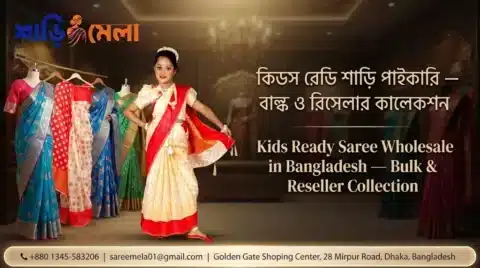
This is one reason ready-to-wear sarees have become a practical option. Saree Mela explains that its ready sarees are pre-stitched, include pre-made pleats and a matching blouse, and can be worn without traditional draping.
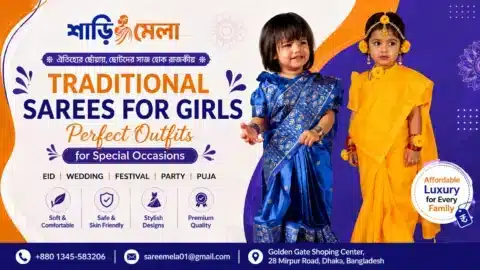
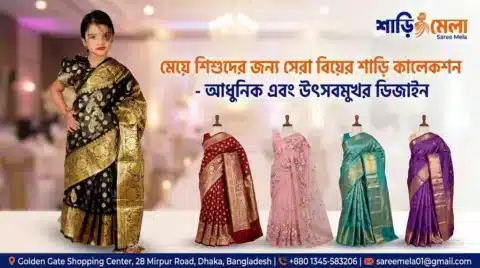
The brand’s current collection includes kids’ sarees in cotton, silk, Katan, Jamdani, and Banaroshi categories. Its homepage also positions cotton as a lightweight choice for everyday wear and special occasions, while silk and Banarosi styles are presented for weddings, festivals, and celebrations.
For families in Dhaka, this practical approach is especially useful because the weather can be warm and humid, while weddings and cultural programs may require children to wear traditional clothing for several hours. The goal should therefore be simple: dress beautifully, secure the outfit properly, and keep the child comfortable.
How to Wear Kids Saree in Dhaka: What Parents Should Know First
How to wear kids saree becomes much easier when parents first understand the difference between a traditional saree and a ready-to-wear children’s saree. A traditional saree requires the wearer to create pleats, wrap the fabric around the waist, position the pallu, and secure everything correctly. That process can be difficult for a child and time-consuming for parents.
A ready-to-wear saree is designed to reduce those problems. Saree Mela describes its ready sarees as pre-stitched garments that can be worn without traditional draping, with the pleats and pallu already prepared. The brand also states that every saree comes with a coordinated ready-made blouse.
For parents, this means the dressing process can be closer to putting on a coordinated traditional outfit rather than manually draping an adult saree.
The first step is always choosing the correct size. A saree that is too long can drag on the floor and become difficult for a child to walk in. A waist that is too tight can cause discomfort, while an oversized blouse can make movement difficult.
Saree Mela’s own buying guide recommends checking waist, length, and blouse fit carefully and prioritizing comfort when selecting children’s ready sarees.
Fabric is another important consideration. Dhaka’s warm climate means breathable materials can be more comfortable for daytime use. Saree Mela specifically describes cotton as lightweight and breathable, making it suitable for everyday wear, family gatherings, school programs, and casual occasions.
For weddings and evening celebrations, parents may prefer silk, Katan, or Banaroshi designs. These can create a richer appearance, but parents should still check the weight and construction before choosing one for a younger child.
A useful starting point is the Saree Mela Kids Saree Collection, where parents can explore the children’s range and compare different styles and fabrics.
How to Wear Kids Saree: Step-by-Step Wearing Guide
How to wear kids saree safely starts with preparing the child and the outfit before putting everything on. The process is easier when parents do not rush.
Step 1: Check the Size Before Dressing
Lay the saree and blouse out first. Check whether the waist, length, and blouse appear appropriate for the child.
The saree should not be so long that excess fabric reaches the floor. The waist should remain secure without being painfully tight.
Step 2: Dress the Blouse First
Put the matching blouse on the child before positioning the saree.
Check the shoulders, sleeves, neckline, and chest area. The blouse should allow the child to move her arms comfortably.
Step 3: Position the Ready Saree
For a pre-stitched design, identify the waist section, stitched pleats, and pallu before putting it on.
The ready-made structure should make this considerably easier than traditional draping.
Step 4: Secure the Waist
Place the saree around the child’s waist according to the product’s construction. Make sure the fastening mechanism is secure but not uncomfortable.
The goal is a stable fit that does not slip when the child walks.
Step 5: Check the Pleats
If the saree has pre-stitched pleats, make sure they fall naturally at the front. They should not twist or bunch up.
For a traditional saree, parents would normally have to create the pleats manually, but ready-made children’s designs eliminate much of this work.
Step 6: Arrange the Pallu
Place the pallu over the shoulder according to the design.
Do not allow excess fabric to hang so low that it can catch under the child’s feet or on nearby furniture.
Step 7: Secure Loose Sections
If the product instructions allow it, use only appropriate garment fasteners to keep the outfit stable.
Avoid placing sharp pins where a child can easily touch, pull, or fall against them. For younger children, a professionally stitched ready-to-wear design can reduce the need for loose pins.
Step 8: Check the Bottom Edge
Ask the child to stand and walk.
Look at the lower edge of the saree. It should remain safely above the floor and should not interfere with the child’s feet.
Step 9: Test Sitting and Walking
Before leaving home, ask the child to:
- Walk several steps
- Sit on a chair
- Stand up
- Turn around
- Raise both arms
- Walk up a few steps if necessary
If the saree shifts significantly during these movements, adjust it before the event.
Step 10: Complete the Accessories
Only after the saree is secure should you add jewellery, hair accessories, footwear, or other decorative items.
This step-by-step approach makes dressing much less stressful and helps parents identify fitting problems before reaching the event.
Kids Ready Saree vs Traditional Draping: Which Is Easier?
kids ready saree is generally easier for parents who want a traditional appearance without spending time creating pleats and adjusting the pallu. Saree Mela’s FAQ explains that ready sarees come pre-stitched, with the pleats and pallu already prepared, and can be worn without traditional draping.
| Feature | Ready-to-Wear Saree | Traditional Saree |
| Pleats | Pre-stitched | Created manually |
| Pallu | Pre-positioned | Draped manually |
| Dressing Time | Usually quicker | More time-consuming |
| Adjustments | Fewer | More frequent |
| Suitable for Children | Very practical | Requires experience |
| Parent Effort | Lower | Higher |
| Event Preparation | Convenient | More complicated |
| Movement Management | Easier to check | Requires careful draping |
The main advantage of a ready-made design is consistency. The pleats have already been prepared, so parents do not need to recreate the same shape every time the child wears the saree.
This is particularly useful before weddings or school programs when several family members are getting ready simultaneously.
Saree Mela says its ready-to-wear designs are intended to make dressing simple and stress-free, while allowing children to play, move, and twirl more comfortably.
For parents who want to compare the different options, the Ready Saree Collection includes both kids’ and adult ready-to-wear sarees.
Traditional draping can still be appropriate for older children when an experienced adult is available to dress them. However, for younger children, a properly fitted pre-stitched design can significantly simplify the process.
Why Choose Easy Saree for Girls from Saree Mela in Dhaka?
easy saree for girls should combine traditional appearance with practical construction. This is particularly important when parents are dressing young children who may not remain still for long.
Saree Mela’s business concept is strongly focused on ready-to-wear sarees for children and adults. Its About Us page explains that the brand was created to allow children to enjoy the saree tradition in an easy, comfortable, and joyful way. It also highlights matching ready-made blouses and fabrics selected for different occasions.
The current website categorizes children’s sarees into Silk, Katan, Cotton, Jamdani, and Banaroshi sections. This gives parents the ability to select fabric based on the event rather than choosing only according to colour or appearance.
7 Reasons Parents May Prefer a Ready-to-Wear Design
- No complicated traditional draping is required.
- Pre-stitched pleats help maintain the saree’s shape.
- Matching blouses make complete styling easier.
- Different fabrics are available for different occasions.
- Children can get dressed faster before events.
- Parents can check movement before leaving home.
- The brand has a physical location in Dhaka as well as online shopping.
Saree Mela is located at Golden Gate Shopping Center, 28 Mirpur Road, Dhaka, Bangladesh, and its website lists phone and email contact information.
The brand also states that it carefully stitches, packs, and inspects sarees before shipment.
For parents who want to understand the brand’s approach and product philosophy, the Saree Mela About Us page explains how the company combines traditional saree styling with ready-to-wear convenience.
Infographic Image Content
Title:
How to Wear a Kids Saree Safely in 7 Easy Steps
Infographic Sections:
- Select the correct size
- Put on the blouse
- Position the saree
- Secure the waist
- Arrange the pallu
- Check the length
- Test walking and sitting
Suggested Image Alt Text:
How to wear kids saree safely step by step in Dhaka
How to Drape Saree for Kids Safely for Weddings and Festivals
how to drape saree for kids depends on whether the outfit is traditional or pre-stitched. For a traditional saree, the process requires more attention because the parent must manually create and secure the pleats. For a ready-made saree, the main task is positioning and securing the pre-stitched structure correctly.
For weddings, the first priority should be movement. Children frequently move between different areas of a venue, stand for photographs, sit with relatives, and sometimes play with other children. A saree that looks perfect while standing still may become inconvenient once the child starts moving.
Before the event, let the child wear the complete outfit at home for several minutes. This allows you to identify problems with the blouse, waist, saree length, footwear, or accessories.
The second priority is the floor length. The saree should never drag significantly on the ground. Extra length can become caught under the child’s shoes and increase the risk of tripping.
The third priority is the waist. A secure waist is important, but parents should not compensate for an oversized saree by tightening it excessively.
The fourth priority is the pallu. The pallu should remain controlled and should not hang so far that it becomes caught on doors, chairs, railings, or other objects.
The fifth priority is accessories. Heavy jewellery may look attractive in photographs but can become uncomfortable during a long event. Lightweight earrings, bracelets, necklaces, and hair accessories are generally easier for children to manage.
The sixth priority is footwear. Choose comfortable shoes with a secure fit. Avoid footwear that is difficult for the child to walk in, especially if the event involves stairs or outdoor movement.
The seventh priority is weather. For warm days, lightweight and breathable fabrics can improve comfort. The American Academy of Pediatrics recommends lightweight clothing and airflow in warm conditions and cautions against clothing being so loose that it becomes tangled or wrapped around a child.
For broader clothing safety information, parents can also consult the U.S. Consumer Product Safety Commission’s clothing safety guidance, which provides information about children’s apparel safety requirements and related clothing hazards.
Kids Saree Wearing Steps: Safety Checklist Before Leaving Home
kids saree wearing steps should always include a final safety check. Dressing the child correctly is only half the job; parents should make sure the outfit remains secure when the child actually moves.
| Safety Check | What to Look For | Why It Matters |
| Waist | Secure but comfortable | Prevents slipping |
| Length | Above the floor | Reduces tripping risk |
| Pleats | Neat and secure | Prevents fabric bunching |
| Pallu | Controlled | Prevents catching |
| Blouse | Correct fit | Supports movement |
| Footwear | Comfortable and secure | Helps stable walking |
| Accessories | Lightweight | Reduces discomfort |
| Fasteners | Properly secured | Keeps outfit stable |
One important point is that a saree should be checked in motion, not only in front of a mirror.
Ask the child to walk normally. Then ask her to sit and stand. Watch whether the saree moves around the ankles or whether the blouse pulls at the shoulders.
If the child is attending a wedding, also consider the venue. A large hall may involve stairs, polished floors, crowded areas, and lots of movement. A saree that is slightly too long may become much more problematic in such an environment.
For school programs, check whether the child will perform on stage. If she needs to dance or move quickly, the outfit should provide enough freedom for those activities.
For outdoor events, consider heat and humidity. A breathable fabric may be preferable to a heavy decorative fabric when the event takes place during the day.
Saree Mela’s own kids’ buying guide emphasizes comfort, correct sizing, breathable materials, and ready-made construction as important considerations.
The Cotton Kids Saree Collection is particularly relevant when parents are looking for lightweight options for warmer weather.
How to Wear Kids Saree: Common Mistakes Parents Should Avoid
how to wear kids saree becomes much easier when parents know what not to do. Many problems happen because the outfit is prepared only for appearance rather than movement and comfort.
1. Choosing Only by Age
Two children of the same age can have different heights and body measurements. Always consider the product’s actual size information.
2. Ignoring the Blouse
The saree may fit correctly while the blouse feels too tight or too loose. Both should be checked together.
3. Allowing Excess Fabric to Drag
A floor-length saree can become a tripping hazard for a child who is walking quickly.
4. Using Too Many Pins
Parents sometimes use additional pins to keep traditional pleats secure. However, sharp pins should be handled carefully and kept away from areas where the child can easily touch or fall against them.
5. Choosing Heavy Fabric for a Long Event
A heavy saree may be appropriate for a short formal appearance but uncomfortable for several hours.
6. Forgetting the Footwear
The complete outfit should be tested with the shoes the child will actually wear.
7. Waiting Until the Event to Try It
Always do a complete trial before leaving home.
8. Overloading Accessories
Large necklaces, heavy earrings, multiple bangles, or uncomfortable hairpieces can make children restless.
9. Ignoring Heat
In Dhaka’s warm weather, layering too many garments under a saree can make a child uncomfortable.
10. Letting Loose Fabric Interfere with Play
Children may forget they are wearing a saree once they start playing. Parents should monitor the outfit in environments with furniture, stairs, playground equipment, or other potential snag points.
For children’s clothing, the CPSC also highlights concerns involving detachable decorations, buttons, snaps, drawstrings, and other potential hazards in certain clothing categories.
This does not mean every saree is dangerous. It means parents should use normal clothing-safety judgment and inspect the garment before allowing a child to wear it for an extended period.
How to Wear Kids Saree for Different Occasions in Dhaka
how to wear kids saree can vary depending on the occasion. The basic fitting process remains similar, but the fabric, accessories, and final adjustments should change according to where the child is going.
Weddings
For weddings, parents can choose silk, Katan, or Banaroshi styles for a richer appearance. Focus on secure fitting and comfortable footwear because wedding venues often require substantial walking.
Eid
For Eid, a lightweight cotton or Jamdani-inspired design can work beautifully, particularly during daytime family visits. A richer silk design can also work for evening celebrations.
School Cultural Programs
Movement should be the priority. The child may need to walk onto a stage, dance, sit, or move quickly. A lightweight ready-to-wear saree can make these activities easier.
Birthday Parties
Parents can choose brighter colours and playful prints. Keep the jewellery simple so the child can enjoy the party without constant adjustments.
Family Photography
For photographs, parents can spend more time on colour coordination and accessories. However, the child should still be able to move comfortably between photographs.
Puja and Cultural Events
Traditional fabrics such as Jamdani, silk, and Banaroshi can help create a culturally appropriate look. Saree Mela currently positions its kids’ collection for festivals, weddings, cultural programs, and family occasions.
The key is to match the clothing to the duration and activity level of the event rather than choosing the most decorative saree available.
Frequently Asked Questions About How to Wear Kids Saree
how to wear kids saree is usually easier with a ready-to-wear design, but parents still have questions about timing, sizing, safety, fabric, and the correct process.
1. How do I put a ready-made saree on a child?
Start with the matching blouse, then position the pre-stitched saree around the child’s waist. Secure the waist, arrange the pre-made pleats, position the pallu, and check the length. Finally, ask the child to walk and sit before leaving home.
2. How long does it take to dress a child in a ready saree?
A ready saree is designed to reduce dressing time because the pleats and pallu are already prepared. Saree Mela specifically describes its ready-to-wear format as a way to make dressing easier and quicker.
3. Is a ready saree safer for children?
A properly fitted ready saree can be easier to manage because there is less loose fabric and fewer manual adjustments. However, parents should still check the waist, length, pallu, fasteners, footwear, and accessories before the child moves around.
4. What size should I buy?
Do not rely only on age. Check the child’s height, waist, saree length, and blouse measurements against the seller’s size information. Saree Mela’s buying guide specifically recommends checking waist, length, and blouse fit.
5. Which fabric is best for children in Dhaka?
For warm daytime weather, lightweight cotton can be a comfortable choice. For weddings and evening celebrations, silk, Katan, or Banaroshi can provide a more formal appearance, provided the child is comfortable with the fabric.
6. Should I use safety pins on a child’s saree?
Avoid unnecessary pins, particularly sharp pins in areas the child can easily reach or where they could cause injury during movement. A properly constructed ready-to-wear saree can reduce the need for manual pinning.
7. What should I do if the saree is too long?
Do not allow the child to walk around with excess fabric dragging near the feet. Recheck the size and construction, adjust it according to the product instructions, or choose a better-fitting size.
Final Thoughts on How to Wear Kids Saree
Learning how to wear kids saree does not need to be complicated. The most important thing is to combine traditional beauty with correct sizing, secure construction, freedom of movement, and age-appropriate styling.
For younger children, ready-to-wear designs can be particularly convenient because the pleats and pallu are already prepared. Saree Mela’s current ready-saree range is specifically built around this concept, with matching blouses and fabric choices for everyday and festive occasions.
The safest approach is to prepare the outfit before the event, check the fit, test movement, and make adjustments while the child is still at home. A good children’s saree should allow the child to walk comfortably without dragging on the floor, sit without feeling restricted, and enjoy the event without constantly needing help.
For Dhaka families, fabric selection is also important. Cotton can be useful during warmer daytime occasions, while silk, Katan, and Banaroshi styles can create a more formal look for weddings and evening celebrations. Saree Mela currently offers all of these categories within its children’s ready-saree range.
Parents should also remember that children’s clothing is not simply about appearance. Comfort, secure fitting, and appropriate movement matter just as much as colour and design.
If you want to explore more children’s saree guides, styling ideas, and buying information, visit the Saree Mela Blog Resources.
And when you are ready to explore the collection, the Saree Mela Kids Saree Collection provides a convenient starting point.
Contact Information
Saree Mela
Phone: +880 1345-583206
Email: [email protected]
Address: Golden Gate Shoping Center,
28 Mirpur Road, Dhaka, Bangladesh
Our Address
Saree Mela
Golden Gate Shopping Center
28 Mirpur Road, Dhaka–1205
Bangladesh
Landmark
Saree Mela is located at Golden Gate Shopping Center on Mirpur Road, approximately halfway between Science Lab and New Market. The shopping center is directly opposite the Government Teachers’ Training College, underneath Dutch-Bangla Bank and Agrani Bank New Market Branch.
How to Reach Saree Mela from Old Dhaka
Customers from Sadarghat, Banglabazar, Chawkbazar, Lalbagh, Bakshibazar, Wari, Tikatuli, and Gandaria can easily reach Saree Mela by bus, rickshaw, CNG, taxi, or ride-sharing services.
From Sadarghat and Banglabazar
From Sadarghat or Banglabazar, take a rickshaw, CNG, or ride-sharing service toward Bakshibazar, Azimpur, or Nilkhet. Then continue toward New Market and Science Lab.
Saree Mela is located at Golden Gate Shopping Center, opposite the Government Teachers’ Training College.
You can tell the driver:
“Golden Gate Shopping Center, halfway between Science Lab and New Market, opposite Teachers’ Training College.”
From Chawkbazar, Lalbagh, and Bakshibazar
From Chawkbazar or Lalbagh, take a rickshaw or CNG via Azimpur, Nilkhet, and New Market.
You can get off at New Market, Nilkhet, or City College and then continue toward Science Lab. Saree Mela is located at Golden Gate Shopping Center, opposite the Government Teachers’ Training College.
From Wari, Tikatuli, and Gandaria
From Wari, Tikatuli, or Gandaria, first travel toward Gulistan. From Gulistan, take a bus heading toward Chankharpul, Bakshibazar, Azimpur, Nilkhet, or New Market.
Buses on this route generally travel through:
Chankharpul → Bakshibazar → Azimpur → Nilkhet → New Market → City College
Get off near New Market or City College, then continue toward Science Lab to reach Golden Gate Shopping Center, where Saree Mela is located.